
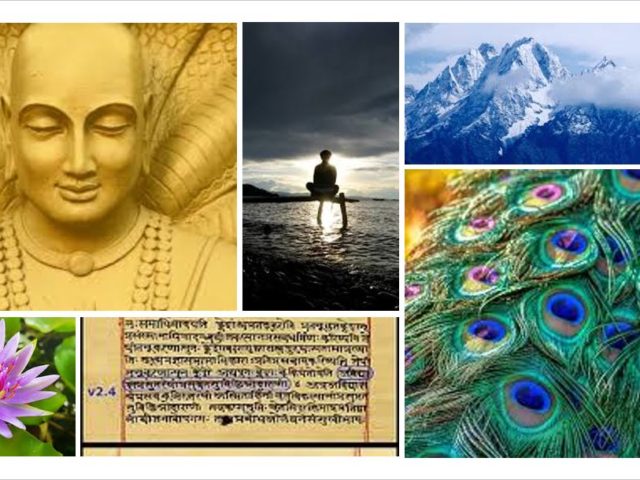
Yoga Sutras of Patanjali is one of the most recognized books on Yogic Philosophy. In this article Yoga Sutras: Samadhi Pada, we explore the first part of that book. This is my interpretation of the book with, of course, the help of my higher self. Pada means verse. Samadhi means unity consciousness and being in a state of meditation. I hope this imparted knowledge helps you on the ascension process and spiritual journey.
Yogash chitta vritti nirodha
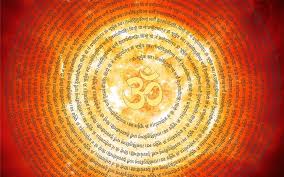
Chitta is the mind. Nirodha is stopping the wheel of the mind. In other words, it is to stop the disturbances of the mind from keeping us stuck in cycles. Mind is attached to the physicality and is filled with pre-conditioned ideas. To truly go beyond the mind, there has to be an understanding that we are not limited to the physical body and mind. This requires bringing the gunas Tamas, Rajas and Sattva into harmony.
Chitta or the mind can understand what is beyond the material world, to truly recognize the divinity within itself, it must attain Buddhi. Buddhi is the intelligence of the Purusha or the higher self, which can only come about when there is acknowledgement and recognition of the Atman or the individual soul as a part of its higher self, Purusha. That is, going from separation mode to unity mode.
Lower aspects of Chitta are the Manas, which is linked to the emotional state of experiencing the world through the senses and associating those experiences with certain emotions. Being stuck in cycles of pain and suffering is part of Manas. Another lower aspect is the Ahamkara or ego, which gives an identity based on the experiences of the Manas. At this stage there is nothing beyond the human being having a human experience.
Five Levels of the Mind
These are the steps of movement from Tamas to Rajas to Sattva. Tamas states are distracted and deluded. Rajas is diffused. Sattva states are reached at one-pointed and finally absorbed when the mind is able to be in focused concentration.
Virttayah panchatayyah klishta-aklishtah.
Pramana viparyaya vikalpa nidra smirtayah.
Five Functions of the Mind
The mind will be engaged in one of these activities at all times. They can be klishatah or aklishtah (with or without afflictions), depending on whether the mind is negatively or positively oriented.
Prataksha anumana agamah pramanani
Pramana or right perception includes prataksha (ability to experience objects with senses), anumana (objective judgement through deduction of facts) and agamah (knowledge from someone trusted and authoritative). Prataksha is seeing the sun with the eyes, anumana is knowing that every morning sun will rise because it has been doing that throughout its existence and agamah is scientists telling us that sun rises in the morning and sets in the evening.
Herbal & Nutrition Therapy
BOOK A SESSION TODAY!
Nutrition supplements, lifestyle recommendations, diet plans and herbal remedies…..
Viparyayo mithya jnyanam atadrupa prathistham.
Viparyaya is when the myths occupy the mind’s intellect, giving wrong perceptions of objects or experiences. They add faulty knowledge to the intellect. Some of these are due to lack of correct information, ignorance or refusal to perceive correctly leading to wrong lifestyles and fear based living. One example can be literally mistaking one object for another. Another is thinking that we are the only intelligent life form in the universe when factors point towards the opposite (wink wink).
Shabda jnyaya-anupati vastu shunyo vikalpah.
Abhava pratyaya vishaya-asampramoshah smirtih.
Vikalpa or imagination is the unreal, nonexistent objects coming to life in the mind through a sound (such as words or sounds). When we hear someone speak, we imagine how it happened. Sound of thunder may trigger a memory of a thunderstorm or lead the mind to imagine how it looks like.
During nidra or sleep the mind is still active through dream state, out of body experiences or in a more subconscious state, whether we recall the experience in the morning or not. Mind is always active in one of these functional forms throughout our life.
Smirtih or memory relates to when the mind absorbs the sense related experiences as part of the digestion of sensory impressions before attaching emotions to store them in the mental field. As imagination is a very powerful force in the human experience, visualizations are used to manifest things into reality. Imagination is like a final screening before the experiences become one with the human being.
Abhyasa vairagyabhyam tan nirodhah.
Tatra sthitau yatnobhyasah.
To stop the cycles of nirodha, practice is needed. Detachment and constant practice is necessary to achieve nirodha. It is the state of being free of the need to learn hard lessons as the understanding is acquired by breaking the repeating cycles.
Detachment teaches us nonpartisan view objects, people or situations from a higher perspective than from the point of view of a wronged, victimized human being. There are greater aspects at play that what meets the eye where the greater universe is concerned.
Practice brings in discipline and ability to quickly turn situations around using the knowledge at hand. By practicing to think positive thoughts, the mind field will orient towards positive imagination and positive ideas.
Herbal & Nutrition Therapy
BOOK A SESSION TODAY!
Nutrition supplements, lifestyle recommendations, diet plans and herbal remedies…..
Sa tu dirgha kala nairantarya satkara-asevito dirdha bhumih
Cultivating the seeds in the mind takes long term practice. Tending to the foundations or groundwork being done in order to plant and grow in the mind space takes dedication, consistency and steady work. Unlearning what has been learned for years takes time and patience as well as learning and cultivating new concepts.
Drishta-anushravika vishaya vitirshnasya vashikara sanjanya vairagyam.
Reduce the desire to have objects or possessions that leads to attachment. Practice of detachment helps to rid the intoxication that comes from the over indulgent pursuit of materialism. When attached to nothing, there is nothing to lose. When there is nothing to lose, there is nothing to fear. Through this same concept, everything is gained as we allow the natural flow of the universal abundance to take place.
Tat param purusha khyater guna vaitirshnyam.
The true detachment occurs when the mind goes beyond the attempt to achieve the harmony of gunas, the state of Sattva. This is when the individual realizes the tat param purusha, the original purusha or oversoul. This is plugging into the unity consciousness and to the idea that we are all part of God or the divine. As fragments of tat Purusha, we are much more capable than the limitations of the mind and the physical body.
At this stage, life is viewed as part of the cosmic evolution. We are incarnated as humans to grow and evolve the soul. Realization that physical death is not the end but end of one incarnation subtracts the fear of death. This new perspective help see beyond the veil, beyond illusion and beyond our skewed view of what human life is, ridding attachments or desires that leads to suffering. Pain is inevitable but suffering is optional.
Vitarka vichara ananda asmita rupa anugamat samprajnyatah.
Vitarka is curiosity lead thinking. Vichara is inquiry. Ananda is bliss. Asmita is immersion in the true self. These lead to objective rationalization of the states of being to come to an understanding of who are at various levels of existence. That means, who we are as humans, who we are at a soul level, who we are at a higher self level and who we are at an oversoul level. We then arrive at samprajnyatah or a state of having equal knowledge of all states of being of existence. This is when fear leaves and ananda (bliss) takes its rightful place.
Virama pratyaya- abhyasa purvah sanskara sheshonya.
Bhava pratyaya videha prakriti layanam.
Through completion of practice comes the end of the works of the mind, be it mind chatter, wrong perceptions leading to wrong lifestyle or wrong view of things. Sanskara sheshonya is ending cycles or patterns that comes through reincarnation. Karmic patterns, imprinted behaviors, learned ideas, core wounds, etc. can contribute to sanskaras that the soul retains through various incarnation experiences as memories.
The understanding of the nature of existence (bhava) as a physical body (prakriti layanam) that dies (videha) in the mind no longer the same anymore. Breaking off from samskaras means uprooting old belief systems making space for the new perceptions to seed. This is breaking off from the reincarnation cycle tied to karma. Ending samskaras allow further evolution to occur through new lessons and experiences.
Shraddha virya smirti samadhi prajnya purvaka itaresham.
Five Spiritual Skills
The stated five spiritual skills above will allow a person to become fully enlightened (purvaka itaresham). It starts with having faith (shraddha) in God/ Universe/ Creator/ Source along with acts of devotion like prayer, mantra or yajna. The effort (virya) made through the acts of devotion (Bhakti Yoga) helps advance in the spiritual path. Awareness (smiriti) is reached about God, our existence and the world around us through various spiritual experiences.
Though the experiences, good and bad, a place of no fear comes about. The true understanding of life lessons comes about, thrusting the individual into a balanced meditative state of mind (samadhi). Connection to the higher self is established and life is seen and experienced from the perspective of purusha (higher self). Through this connection wisdom (prajna) is endowed upon the individual, enabling higher perception and an active participation in creating realities.
Energy Healing Session
We all have dark and light aspects within ourselves. Identifying the dark aspects and integrating them into the light to heal and transform to a better and higher version of self is the key goal. The healer will provide space to release the past traumas, abuse, emotional baggage, repressed emotions and other shadow aspects. This release is like a clean up that creates space for light and positive aspects to enter your life.
Ishvara pranidhanad va.
Klesha karma vipaka-ashayair aparamirshtah purusha vishesha ishvara.
Another way of achieving higher perception other than the five spiritual powers listed above is through Ishvara Pranidhana, devotion to God. Ishvara (God) is a special Purusha who is beyond toxicities, karma and negative results of bad actions because Purusha is in a state beyond the incarnation cycles as the Godhead. Yoga of Devotion (Bhakti Yoga) can bring in blessings and advancements in the spiritual journey thus.
Tatra niratishayam sarvajnya bijam.
Sa purvesham api guruh kalena-anavachedat.
The seed of all knowledge (sarvajnya bijam) exists at a limitless place beyond form and matter. This refers to a place beyond time and space where all things began. A dimension where only God exists is where this original seed of wisdom is planted. So, through Ishvara Pranidhana, we are able to gain direct knowledge and wisdom in pure form than through any guru who taught through the ages of time.
Tasya vachakah pranavah.
Taj japas tad artha bhavanam.
Tatah pratyak chetana-adhigamo pyantarya-abhavash cha.
Pranavah is the flow of life force energy or Prana. Chant (vachakah) the mantra OM, which is the ultimate bij mantra and the representation of Ishvara (God) as the word of creation. Repeat (japa) this mantra while meditatively focusing on its meaning (artha bhavanam). It grants intentions (pratak chetana). Interference to learning disappears (adhigamo pyantarya). Growth takes place (abhavash cha).
Vyadhi styana sanshaya pramada
alasya avirati bhranti darshana
alabdha bhumikatva
anavasthitatvani chitta vikshepas tentarayah
Sicknesses, stagnancy, doubts and delays in action along with laziness, dispassion and delusions would cause ungroundedness and loss in the mind space. This is all unnecessary to cause such mistakes that causes the mind to fall to lower levels. It says to pay attention to what occurs in the mind and to consistently tend to its well being without slacking to establish firm foundations that last.
Duhkha daurmanasya angam ejayatva shvasa prashvasa vikshepa sahabhuvah.
The idea is to distance the mind (durmanasya) from sorrow (duhkha). This is a factor of ultimate victory (ejayatva) or transcendence in human life. Transcendence is conquering the mind and accessing what is beyond it. Sorrow comes from ignorance. Ignorance is limited knowledge. By detaching from sorrow, we detach from what is holding us down to transcend to a place greater.
Intake and outgoing of distractions that are in the environment. Meaning, all the mental distrations that are available in society today such as media, pollutants, wrong lifestyles, etc. is taken in by people, which leads them to sorrow at the end. Elaborating on that, the simplistic explanation is the pursuit of happiness through materialism, which provides temporary satisfaction. The permanent happiness is through following Dharma, true life purpose, in alignment with listening to the heart space.
It is easy to hear intuition when mind is not distracted through lower desires. Clearing the mind, listening to the true passions by paying attention to the heart chakra and being aligned with true self helps to match the true passions in an individual.
Tat pratisheda-artham eka tattva abhyasah.
Maitri karuna muditopekdhanam sukha dukha punya-apunya vishayanam bhavanatash chitta prasadanam.
Four Immeasurable Virtues
There is only one meaningful way to practice this state of being. Compassion is maitri. Karuna is kindness. Muditha is joy that comes from not having expectations. Upeksha is tolerance of all beings. All four are heart chakra based emotions that arises from having a clear mental space (chitta). Vedic philosophy emphasizes on the fact that heart is where is mind is, not the brain. With this in mind, we can deduce that clearing the heart space brings out love, the base of karuna, maitri, muditha and upeksha.
This verse speaks of giving maitri, karuna, muditha and upeksha are the practices that helps to transcend sorrow and pain in this world. These topics of discussion will help through in happiness or in sorrow (sukha dukha) , in merit or demerit (punya apunya). Practice of these four brings us to the ultimate space of love that crosses over from separation to unity, from judgement to acceptance, making the mind pleasant (prasadanam).
These four immeasurable virtues are used in the Pratipaksha Bhavana (opposite therapy) in Ayurveda and Yoga. By using the opposite emotions like the four virtues, there can be the elimination of negative emotions like anger, hate, judgement, etc. to cultivate purity in mind over time.
Prachardhana vidharanabhyam va pranasya.
Vishayavati va pravirttir utpanna manasah sthiti nibhandani.
Along with the four virtues, another way to clear the mind is through breath work. Intake and management of prana, life force energy, through the nose is vital to clear the emotional and mental bodies. Incoming (prachardhana) and outgoing (vidharanabhyam) of breath through prana coming through the nose (pranasya) helps to dispel negativity.
Uproot (utpanna) the themes (vishayavati) in the mind space (manasa) that helps to be free of bondage (nibhandani) from things that keeps the mind stuck or stagnant (sthiti). That is basically sending prana to the body by breathing in light and breathing out negative, dark energy that blocks the free flow of prana in the body. Self healing system in the body, in other words.
Breathing right is very important. Equal intake and outtake as well as depth of the breath is important in Vedic philosophy. Due to traumas and shocks, the breath weakens and becomes shallow. To clear the hidden traumas and release the emotional wounds, he simple act of breathing well can go a long way.
Vishoka va jyotishmati.
Vita raga vishayam va chittam.
Vishoka means without sadness. Jyotishmati means like a cosmic ray that is bright. The matters in the mind flows to a rhythm. What is a cosmic ray? It is visible and invisible light in the electromagnetic spectrum, if we speak in scientific terms. When we gaze into the universe to admire its beauty, we see the bright cosmic lights such as through Aurora Borealis.
Light can take many forms. Agni means fire. Tejas means the inner fire of the body that shines like a glow through tapas practices. Jyoti is the inner light. Lightest particle of light is a photon. Sun rays are a form of light. We have a light body as what we call the astral body. Our spirit is made out of light.
Mental and emotional koshas or sheaths are part of the light or the astral body. Prana runs through the physical body to the astral through nadi channels and chakras. Through pranayama we allow this pranic energy flow to gain its rhythm back. The four virtues trains the mind to be positively oriented, as it is our true nature to be so by removing blocks, traumas, suppressed emotions, negative memories and negative experiences.
Svapna nidra jnyana-alambanam va.
Yatha-abhimata dhyanad va.
Parama-anu parama mahattvantosya vashi kara.
The wisdom (jnyana) that comes through dreams (svapna) in the sleep state (nidra). Our intention or longing (abhimatha) to know the true nature and existence (yatha) can be granted (dhyanand) through that wisdom. The root of all existence (parama-anu), the original (parama) Being of Consciousness (mahatvantosya) is unveiled then. Vashi kara literally means intoxicated or under an illusion of magic.
In simple terms, during sleep time we have full access to the subconscious, unconscious and conscious states of being. While awake we are only conscious under the veil of amnesia. Most of our lives are spent trying to remember why we came here and the point of our existence, which is where intoxication comes from as we forever search for answers.
In the dream state, a form of intuition, we are exposed to wisdom or higher knowledge, IF we learn how to decipher our dreams. Most people live in this world having no idea that the symbolic world of dreams is the universe’s way of communicating to us. Tesla stated that our world is full of symbols through patterns, geometry and mathematics. It could be signs through numbers, animal totems or deja vu type of feeling. It is the humans who fail to receive the messages.
The practices and methods stated in this book is a guideline to come to a place where you can be receptive towards these messages and to learn to quiet the mind so the intuitive parts of the body can open to receive. Then we no longer will crave to know the unknown as the unknown will be known. We will learn what our true nature and purpose is, putting an end to the rat race.
Kshina virtter abhijatasyeva maner grahitir girhana grahyeshu tat stha tat anjanata samapattih.
Tatra shabdha-artha jnyana vikalpaih
sankirna savitarka samapattih.
Smirti parishuddhau svarupa shunyeva
artha matra nirbhasa nirvitarka.
Vedic Counseling Session
BOOK YOUR SESSION TODAY!!
Spiritual journey requires some advice to help stay on the path of ascension. Yogic principles and philosophy were created to provide clear guidance on how to approach physical life in a spiritual manner to connect to the unity consciousness and beyond.
Find out how you can make space for spirituality in your life with this session while identifying karmic patterns in order to learn how to overcome them.